

(Click slider photo to see caption)
I was 15 on the first Earth Day in 1970 and don’t remember it too well—but it certainly affected my life and ideology a few years later.
The first Earth Day was organized by a junior Senator Gaylord Nelson (D-WI) who was concerned about the deteriorating environment in the U.S. particularly a massive oil spill in Sant Barbara CA in 1969 (from large off-shore oil drilling rigs). He wanted to infuse the energy of university student protests (against Vietnam war) with emerging public concerns about air and water pollution.
April 22—between spring break and final exams on most campuses—was chosen to maximize student involvement. The name Earth Day sparked media attention and 20 million Americans—10 percent of the population at the time (!) participated in demonstrations against 150 years of industrial development and related human health impacts.
The bipartisan event sparked civic engagement that helped lead to the National Environmental Protection Act, the Occupational Safety and Health Act and the Clean Air Act; it also was catalyst for creation of the Environmental Protection Agency. Some say it launched the environmental movement.
During my student years at University of Arizona 1973-1977, besides “majoring in hiking rather than journalism” (according to my mother), I also became an ardent environmentalist. I was appalled by the 1972 report The Limits to Growth (a simulation of potential disaster from exponential population growth); hiking buddy and eventual spouse David and I wondered if it was ok to even bring more children into the world (we settled for one daughter much later in life). We also discussed ways to drop out of society and “live off the land.” (Although we settled for paid jobs and living in small towns and cities).
Oil shortages in 1973 and 1979 launched an “energy crisis” with elevated gasoline prices and manufacturers started making economy cars with higher gas mileages. We each brought a small car (mustang) to our marriage. Starting our life in Oregon, we recycled, shopped as much as possible at the Corvallis Co-op, made our own peanut butter and yoghurt, and tried to use bicycles for around-town transport. (Our recycling fervor was somewhat cooled when we moved to Utah which had inadequate recycling facilities.)
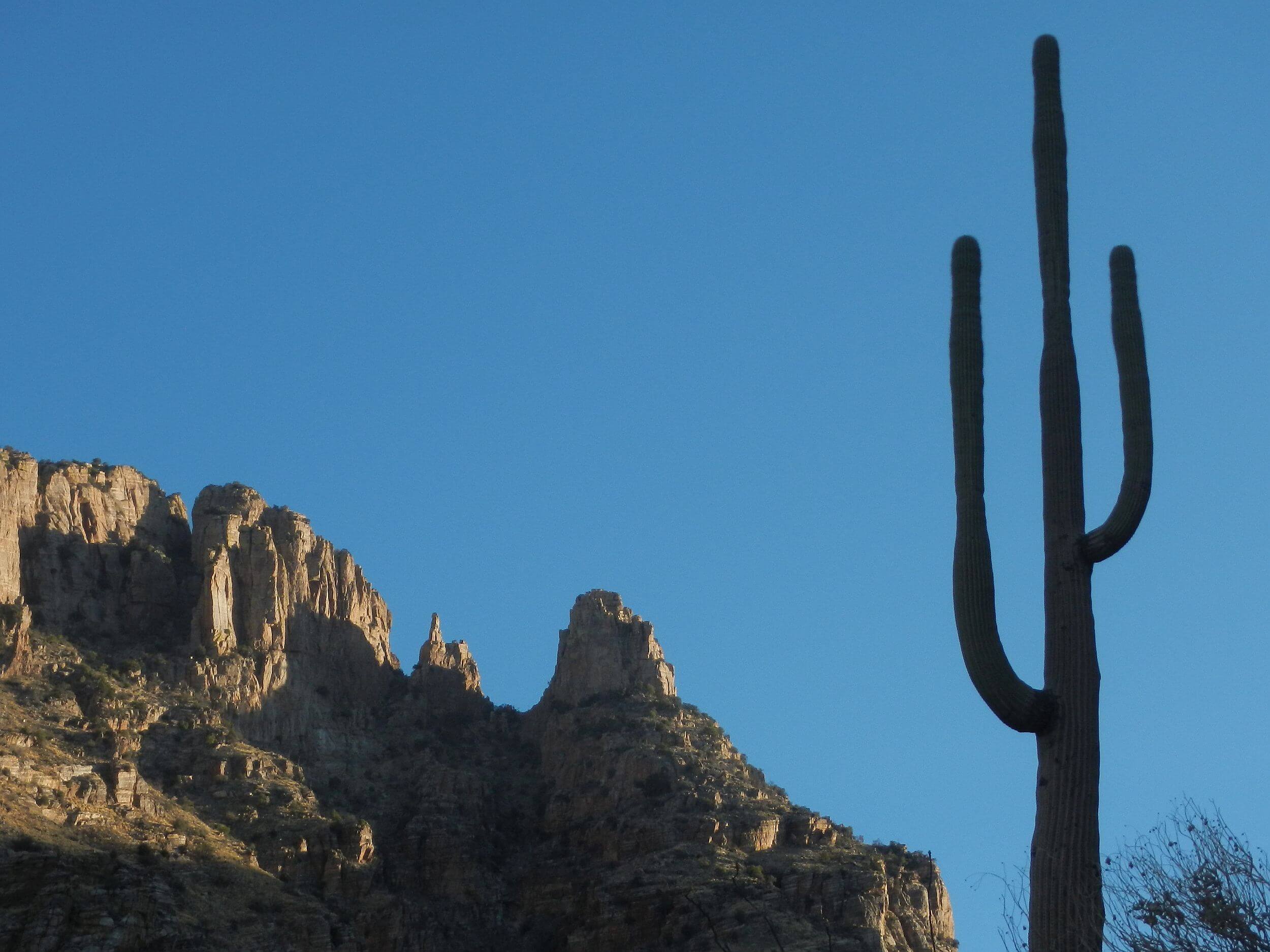
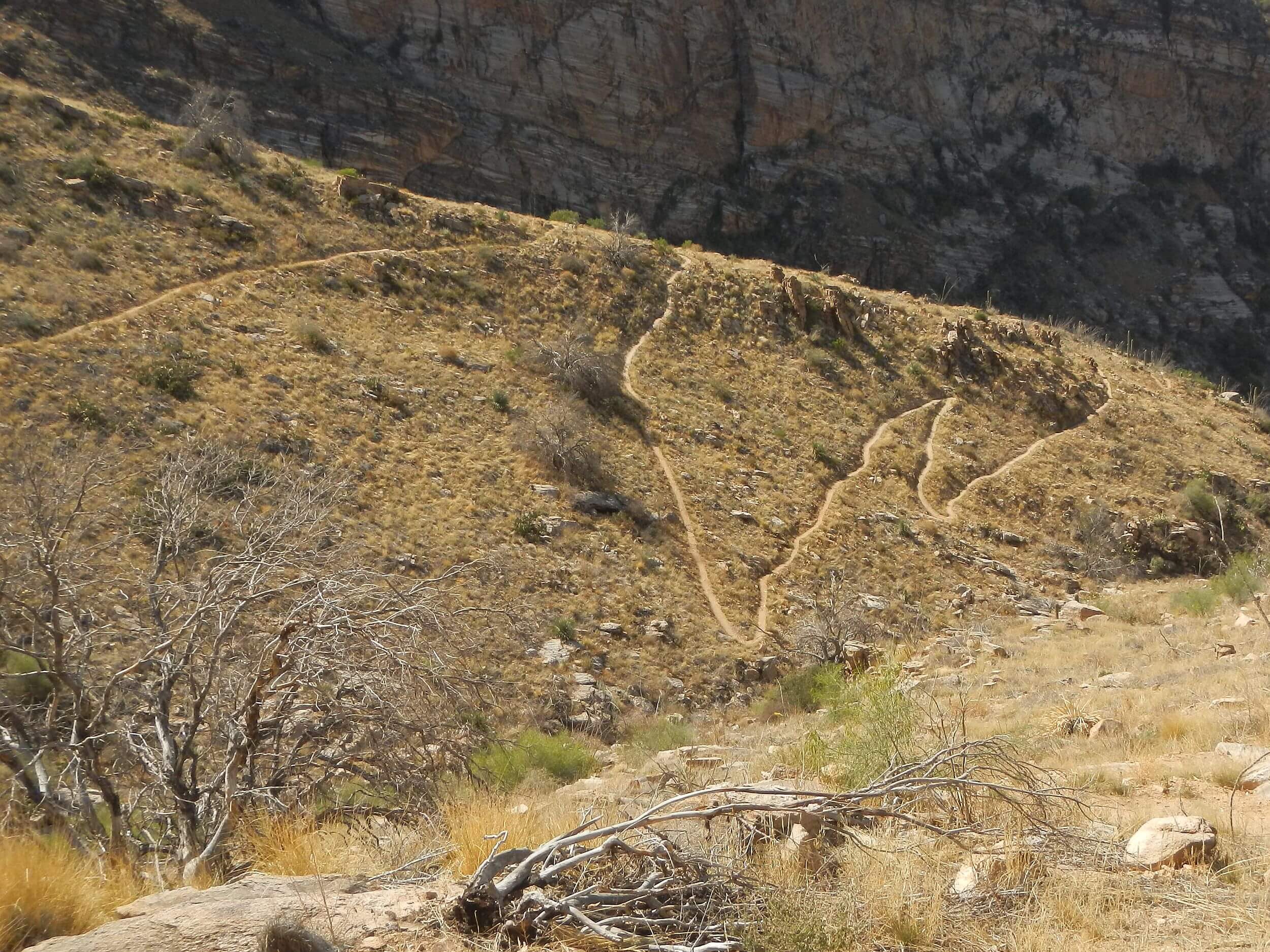
I was thinking about Earth Day 1970 this morning as we took a short but strenuous hike in the Santa Catalina mountain foothills above Tucson to celebrate Earth Day 2026. Tucson had several Earth Day events between April 18-25 including road, river and neighborhood cleanups; probably most activist was the Climate Action Earth Day at UA campus.
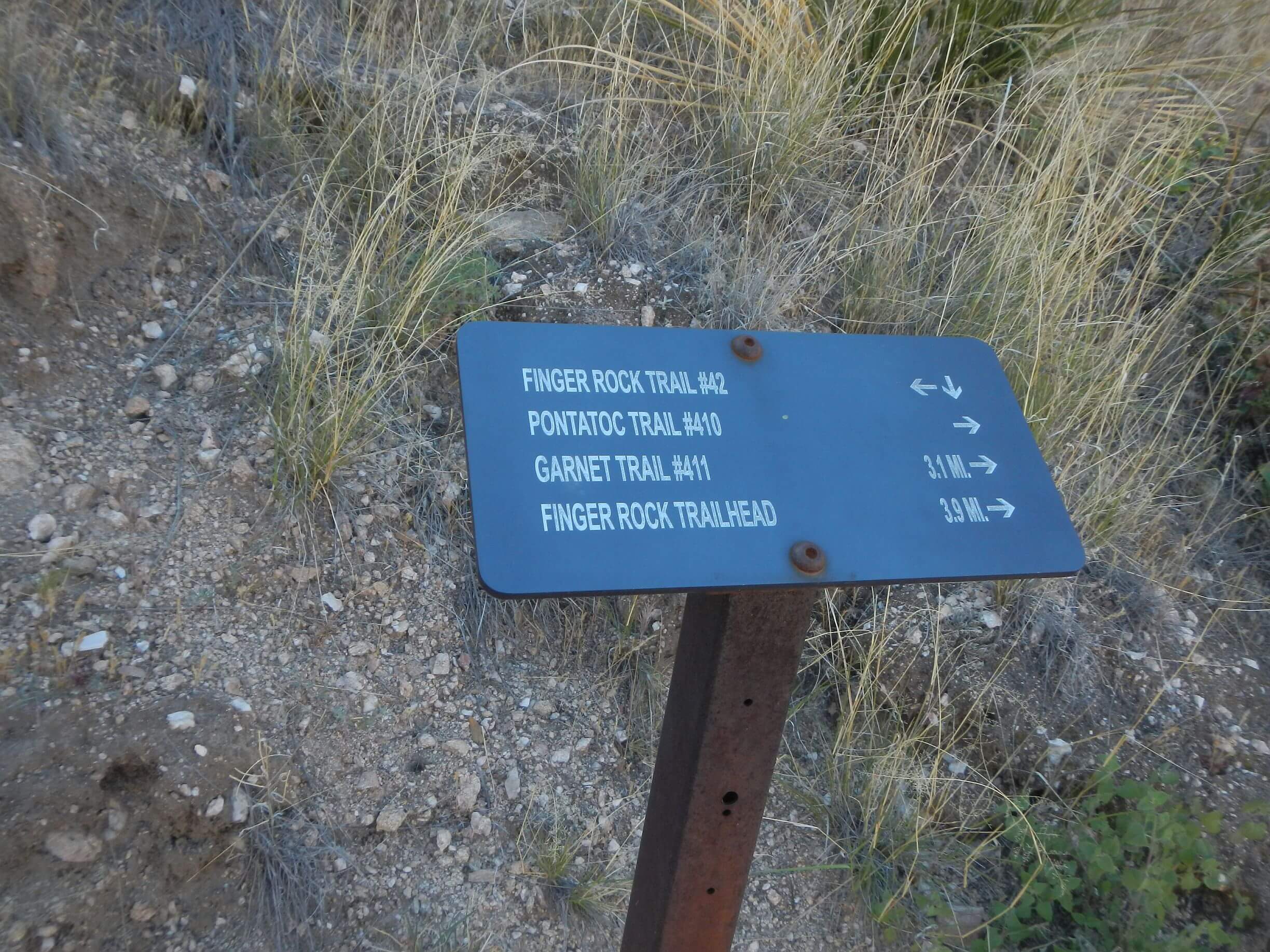
But a hike seemed best activity for us. I had been wanting to check out a new trail section built by a contractor in 2024 to create a 7.7-mile (our GPS data) loop between Finger Rock and Pontatoc trails climbing more than 2500 feet up to a saddle at 5500 feet. The more ambitious can continue another 2 miles to Kimball Peak. (For our day hike route, go to our Pusch Ridge Wilderness visits, scroll down to map, click on upper right hand corner to view map and legend on left, then scroll down legend nearly to end and check box for “Day hikes 2026 Apr & 2023 Feb, Mar, Apr” and note green trail on map.)
After the 3.1 mile rough, rocky steep Finger Rock climb (thought to be one of most technical in the rugged steep Catalinas and a favorite with gnarly trail runners ) which we did at a sluggish 1.4 mph pace (including stops), we took a long stop at Pontatoc saddle before enjoying the leisurely two-mile descent of windy switchbacks created by my favorite trail-builders, Outslope Trail Solutions.
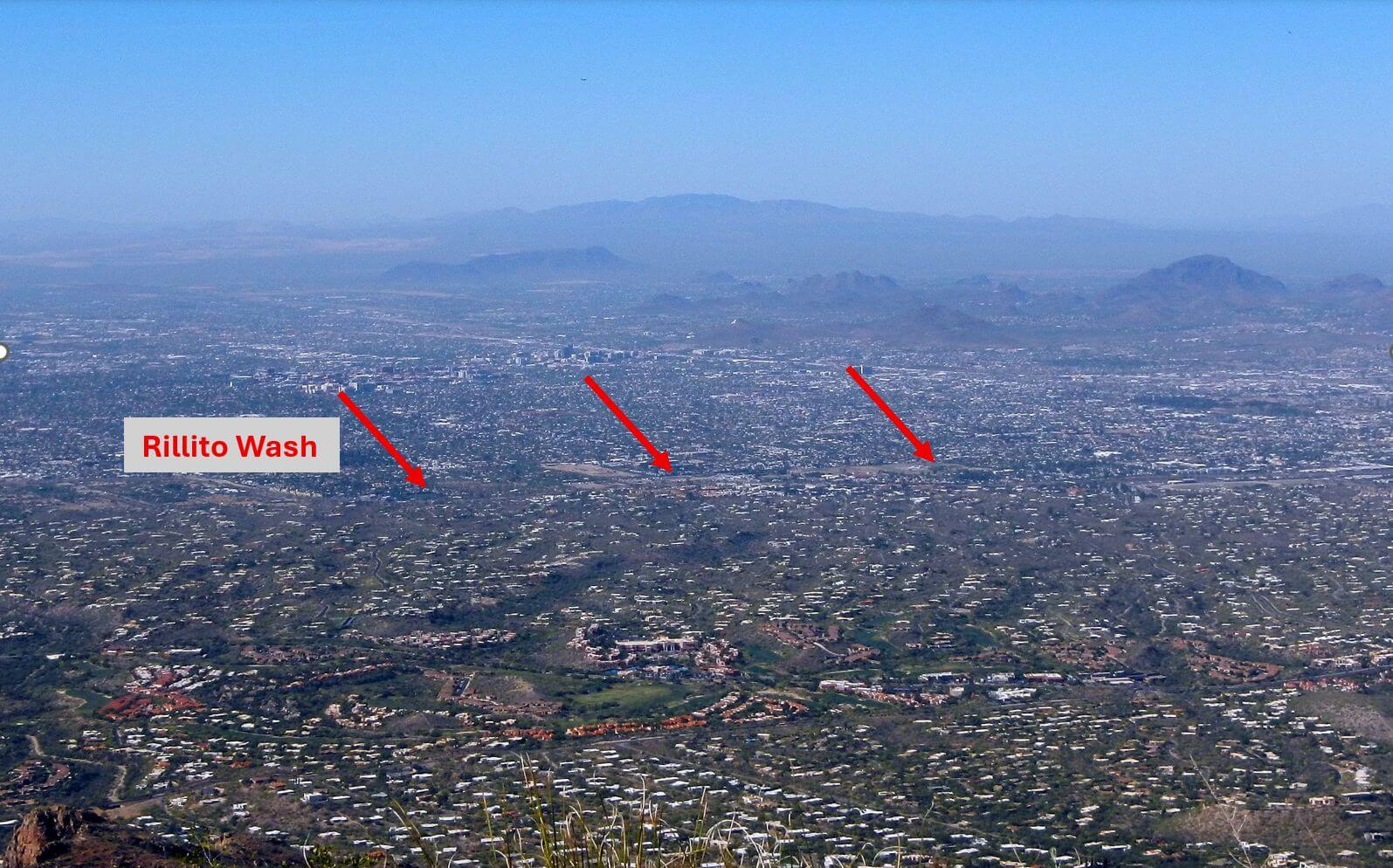
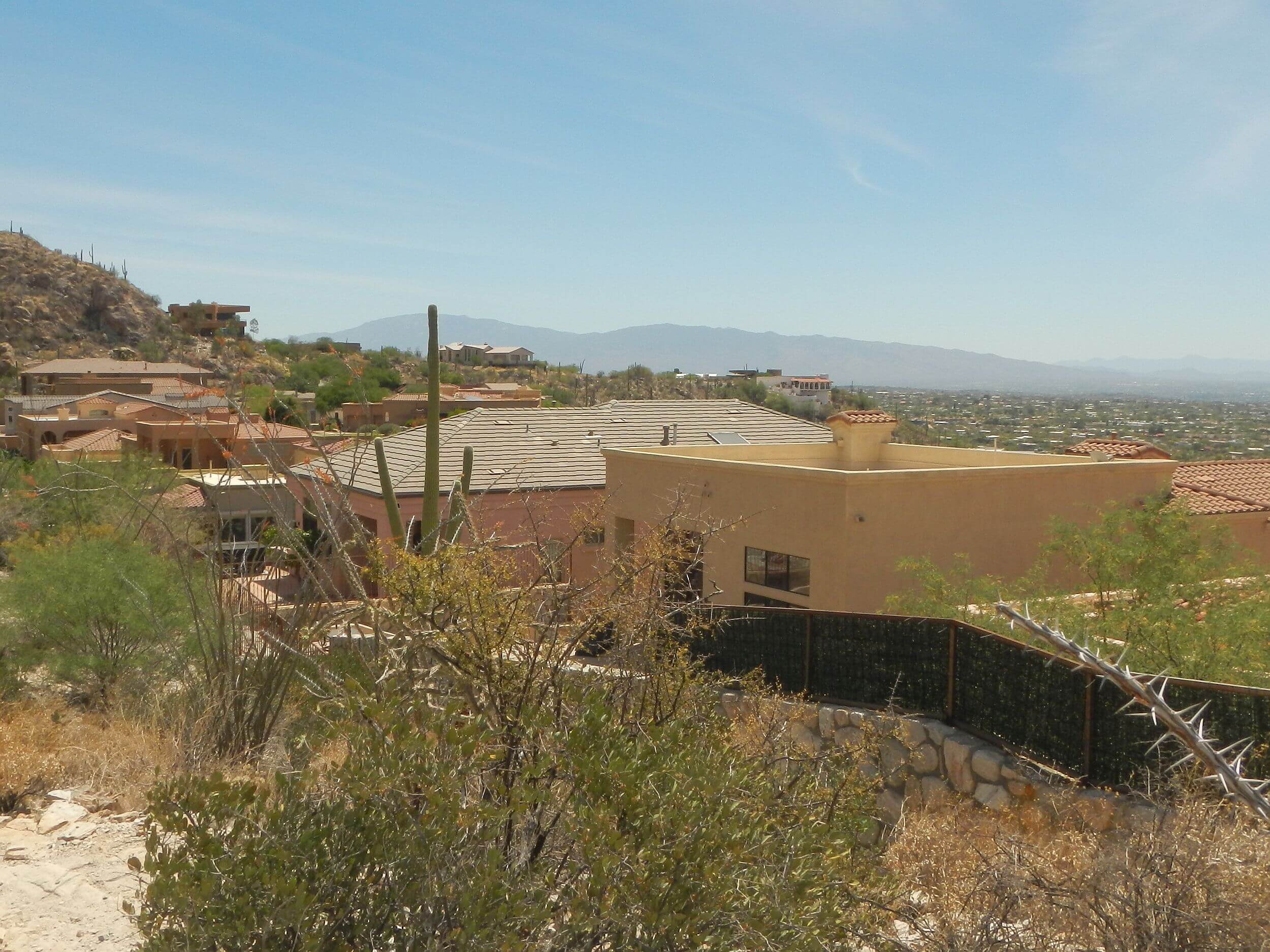
From the saddle, Tucson sprawled below us. We noticed much denser housing in the inner city and to the south and west of Rillito Wash, while north of Rillito large rooftops were sparsely scattered throughout the entire area up to national forest boundary and only a few denser orange rooftops bordered main roads or golf courses—perhaps townhouses or apartments? Housing in Tucson area, including the Catalina Foothills, experienced its most significant growth spurt during the 1970s through the 2000s, with 74% of all area homes built during this period, mostly in the foothills. (Interesting response to Earth Day). A major boom occurred between 2000 and 2009, when nearly 19% of all current homes were constructed, just prior to the Great Recession (2007-2009).
I was finishing my journalism degree in 1977, when politics in Tucson made a sharp “right” turn. Three “reform” Democrats on the City Council were recalled in an election sparked by foothills residents angry about “lift charges” the council had imposed on foothills residences to cover increased cost of delivering water to higher elevations. Some residents had a huge jump in their water bill. Developers, hoteliers and other pro-growth forces rabble-roused foothill residents to vote out the reformers.
Twenty years later, a recap observed that the “reform Democrats” were thought to be using water rates to slow growth in the foothills. The city council majority was trying to fill in central Tucson and reduce rapid growth on the outskirts. But after the “carnage” of the recall, the writer observed: “The basic message had been loudly sent—Tucson politicians should stay out of the way of the growth steamroller. For the past two decades, it has been a rare city council member indeed who questions any growth-related issue.”
Census figures support the idea that slow-growth was derailed in Tucson. In 1970 population was 262,933, in 2026 it is 559,695—more than double. Metropolitan Tucson is a bit over 1 million people. (Too many for our road system, particularly at rush hour!)
We saw only a few folks on the steep trails—a bustling male who passed us early on our hike, maybe bound for Kimball, two guys we met at the saddle, coming up Pontatoc, and two who passed me when I slowed down on the steep rocky canyon drop—one racing down after out-and-back to saddle and a trail runner doing our loop who bounced down the rocks as I crept my way down. We met a few more near trailhead. About 10-12 vehicles in parking lot indicated more people hiking a ways up Finger Rock Trail.
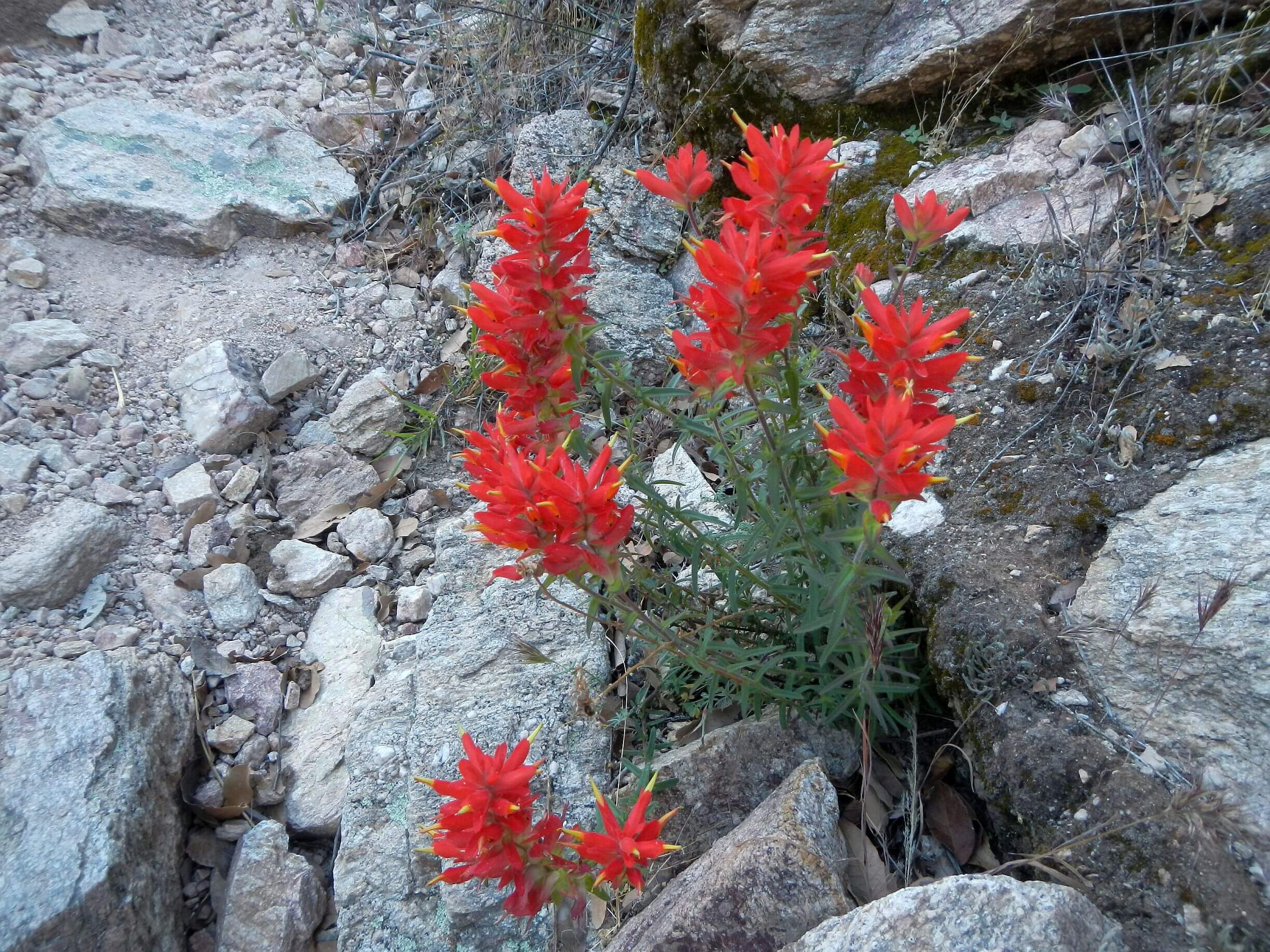
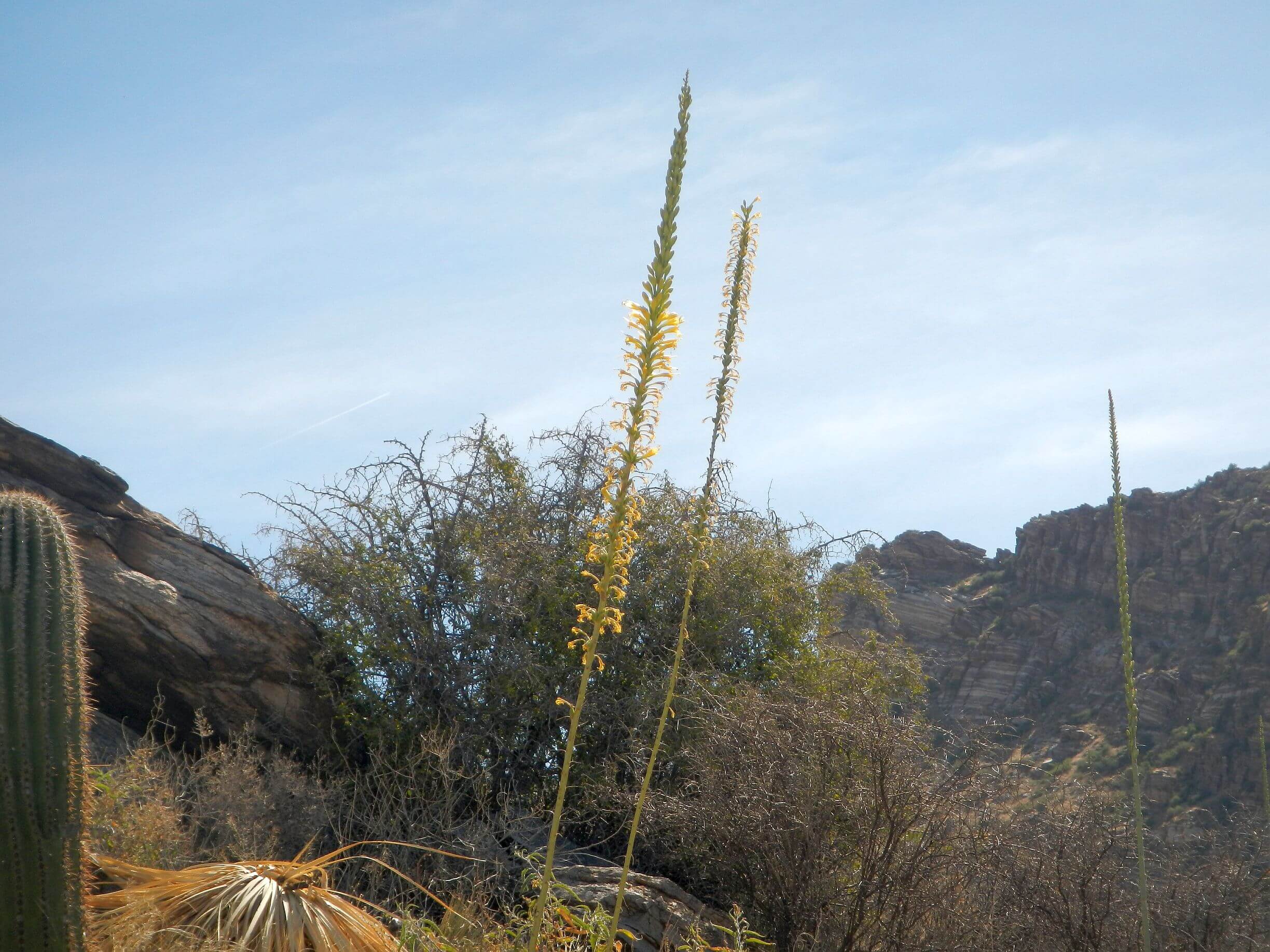
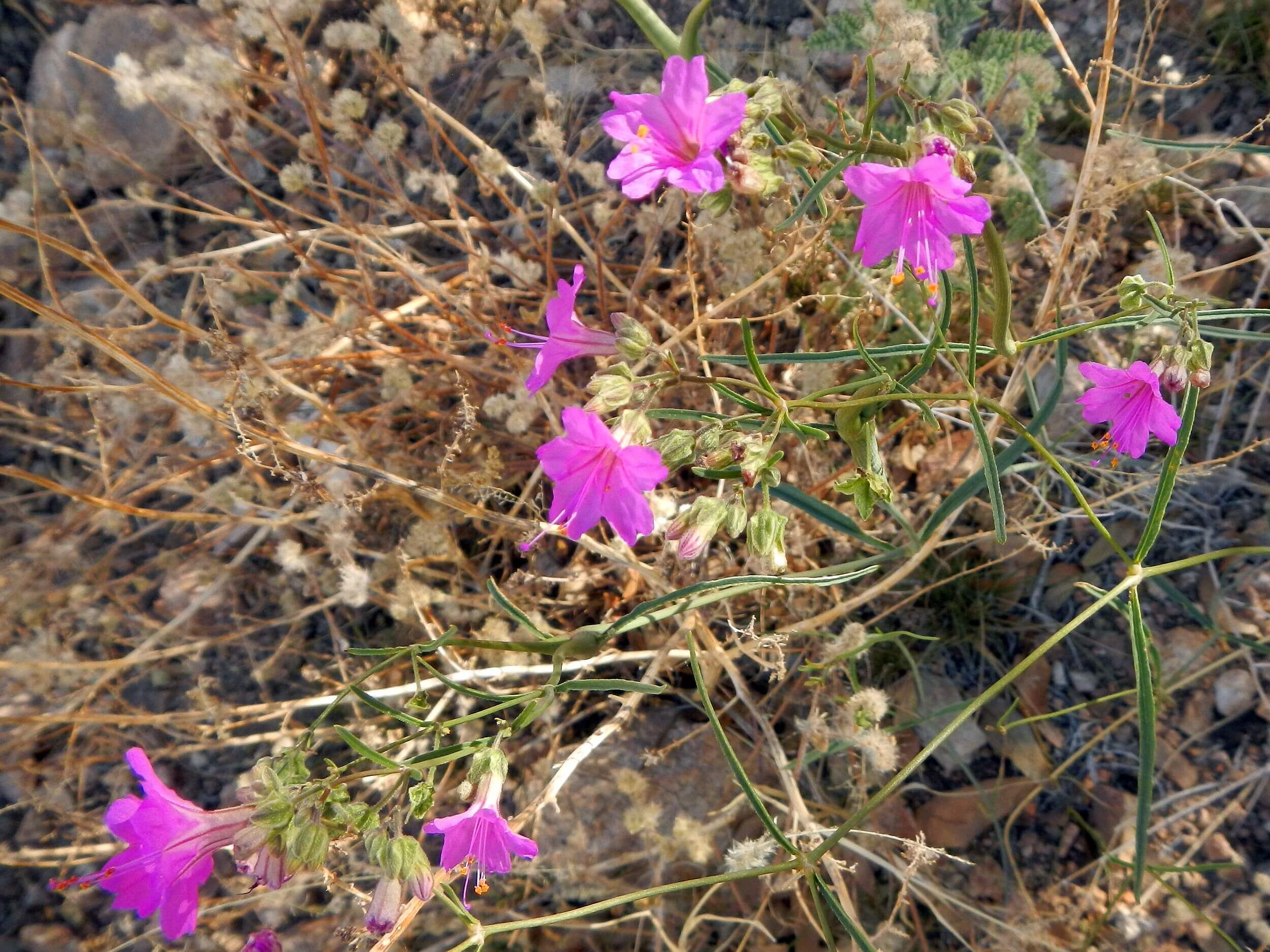
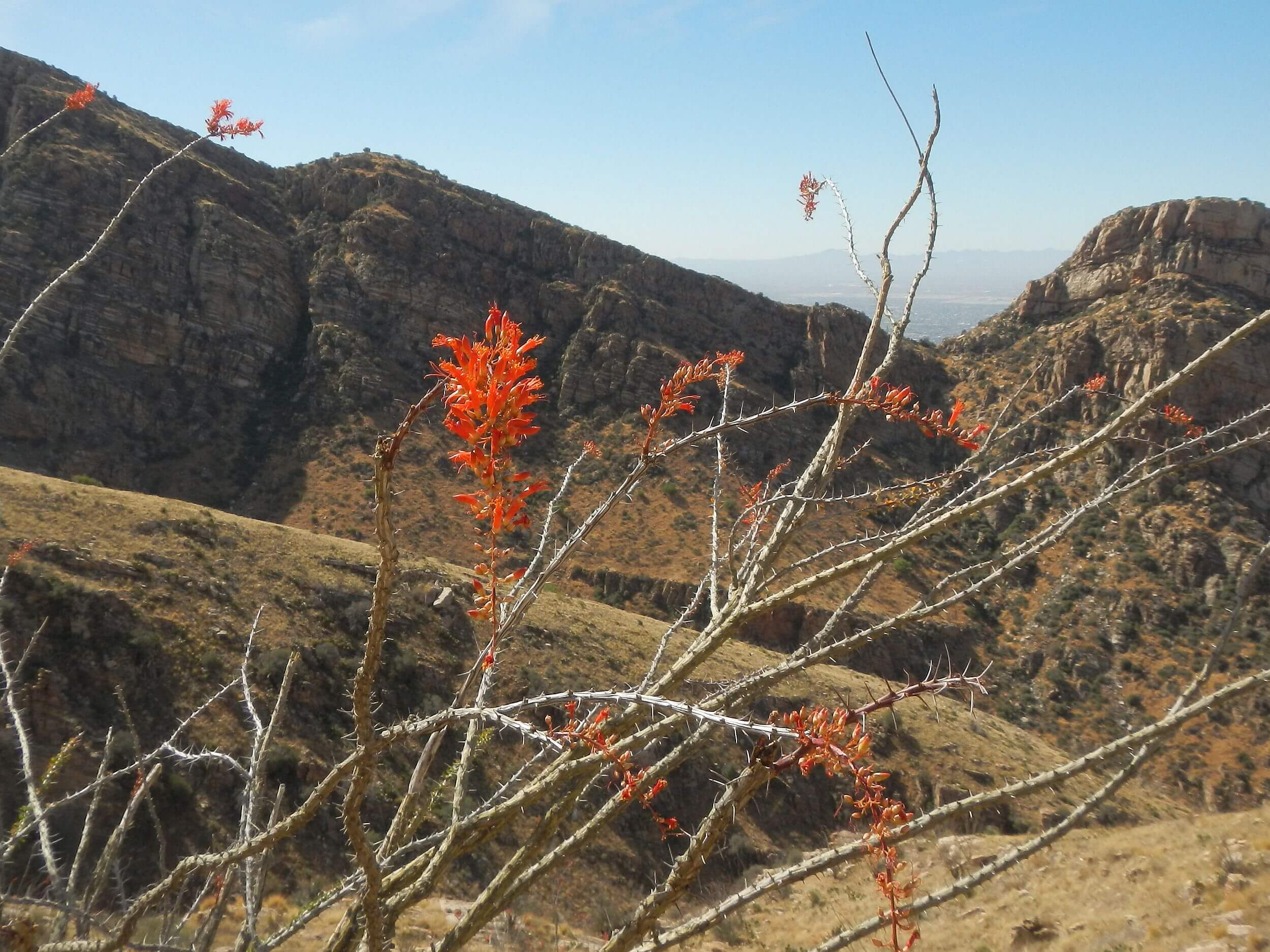
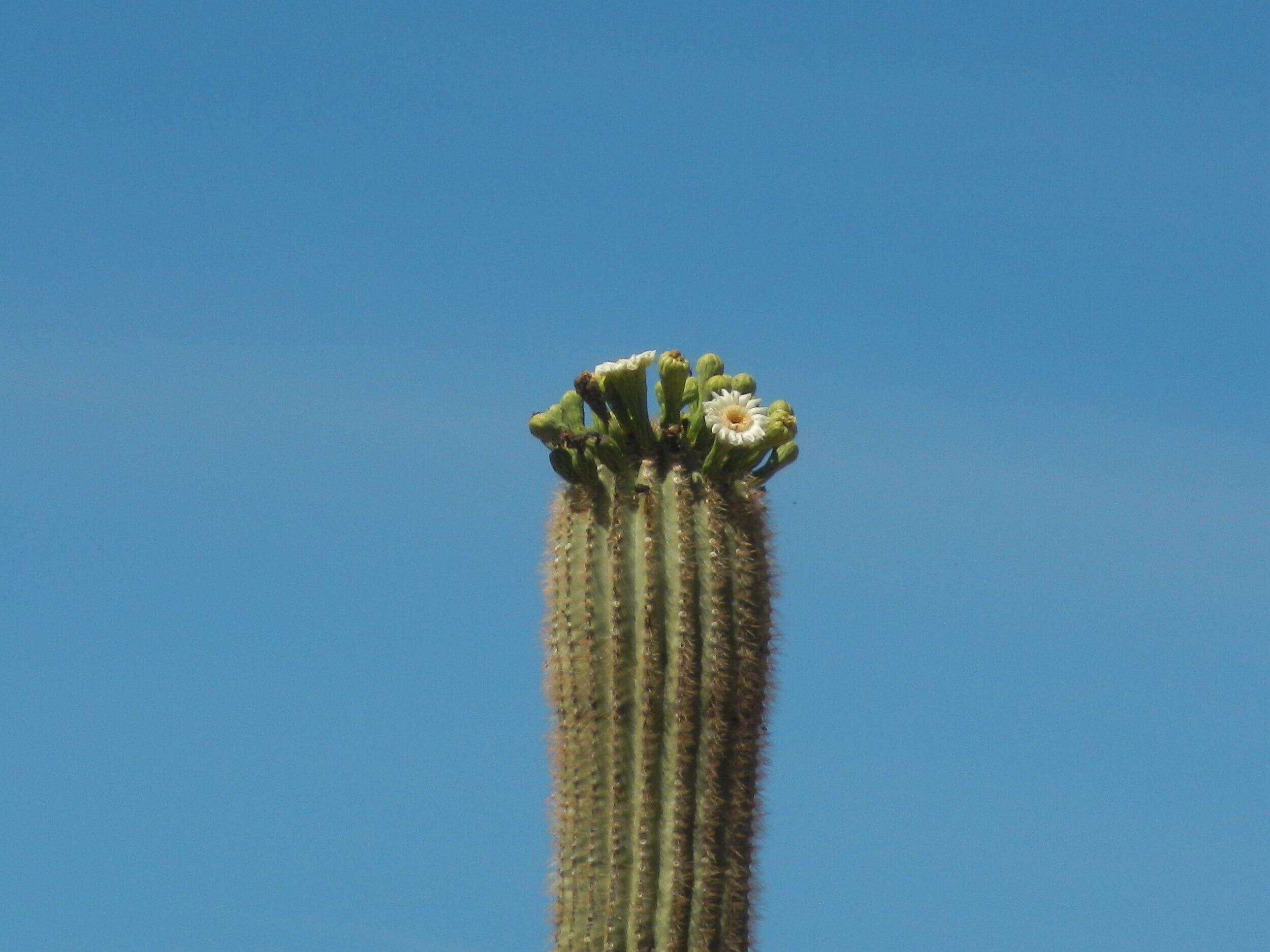
Fairly cool at 4000 to 5000 feet and those elevations were celebrating Earth Day with floral bouquets in shaded areas (goldeneye, paint brush & four o’clock) and blossoms on saguaro, ocotillos, agave, shin daggers (Schott’s agave), and prickly pear cactus.
The Earth Day website says 1 billion people from 192 countries participated in 2026 Earth Day activities, planting trees, trying to educate people on the environment and protesting environmental degradation and climate change. Ironically, in the U.S. where Earth Day originated, the current President is focused on gutting the EPA and land management agencies, rolling back environmental protections, and trying to undo many green projects of his predecessor.
Eight million people in the U.S. showed up at the most recent No Kings Day to protest this President’s policies; still a long way from the showing for Earth Day 1970. I found no U.S. numbers on 2026 Earth Day participation.
Finally, economic and political concerns seem to top the list of U.S. citizen worries, with environmental problems of much lesser concern (only 29 percent saw global warming as major concern in 2025).
Tucson political demographics lean blue and pro-Democrat but there are more conservative voters in the outlying communities and foothills. So maybe the people in the big houses are happy with the unraveling of Earth Day 1970s accomplishments.