
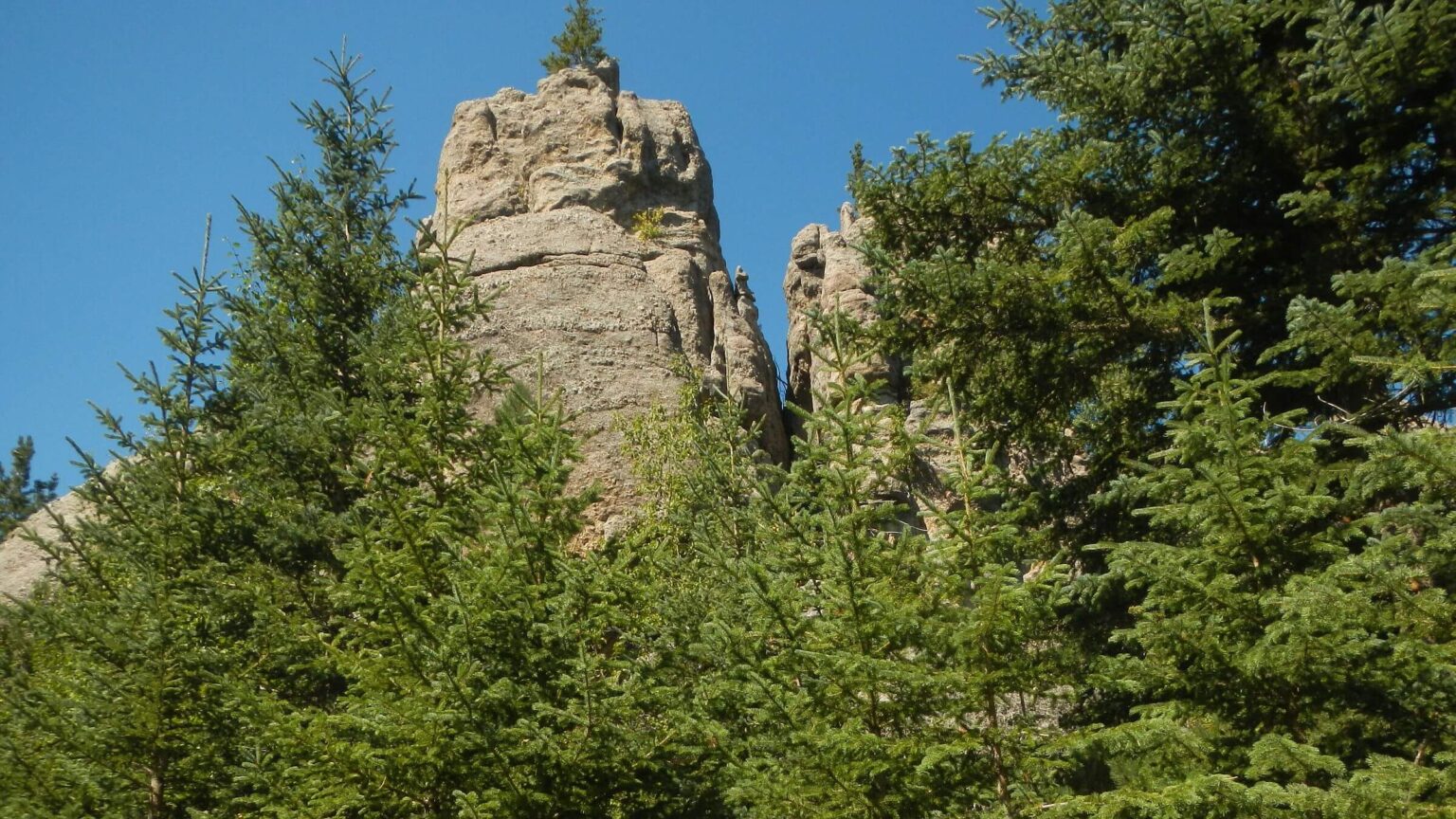
 White spruce (Black Hills spruce) & rock spires common
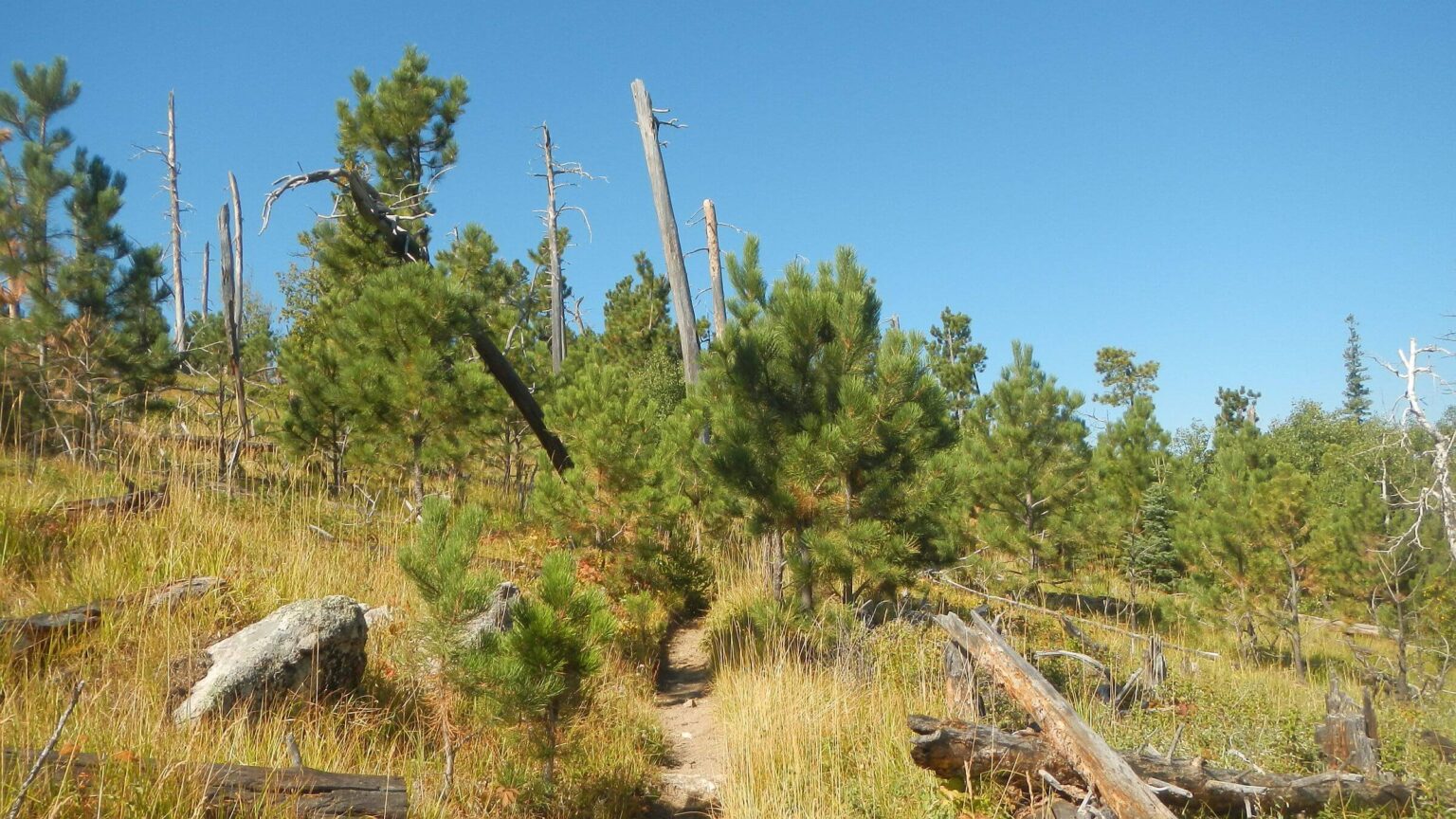 Young ponderosa pine after some disturbance
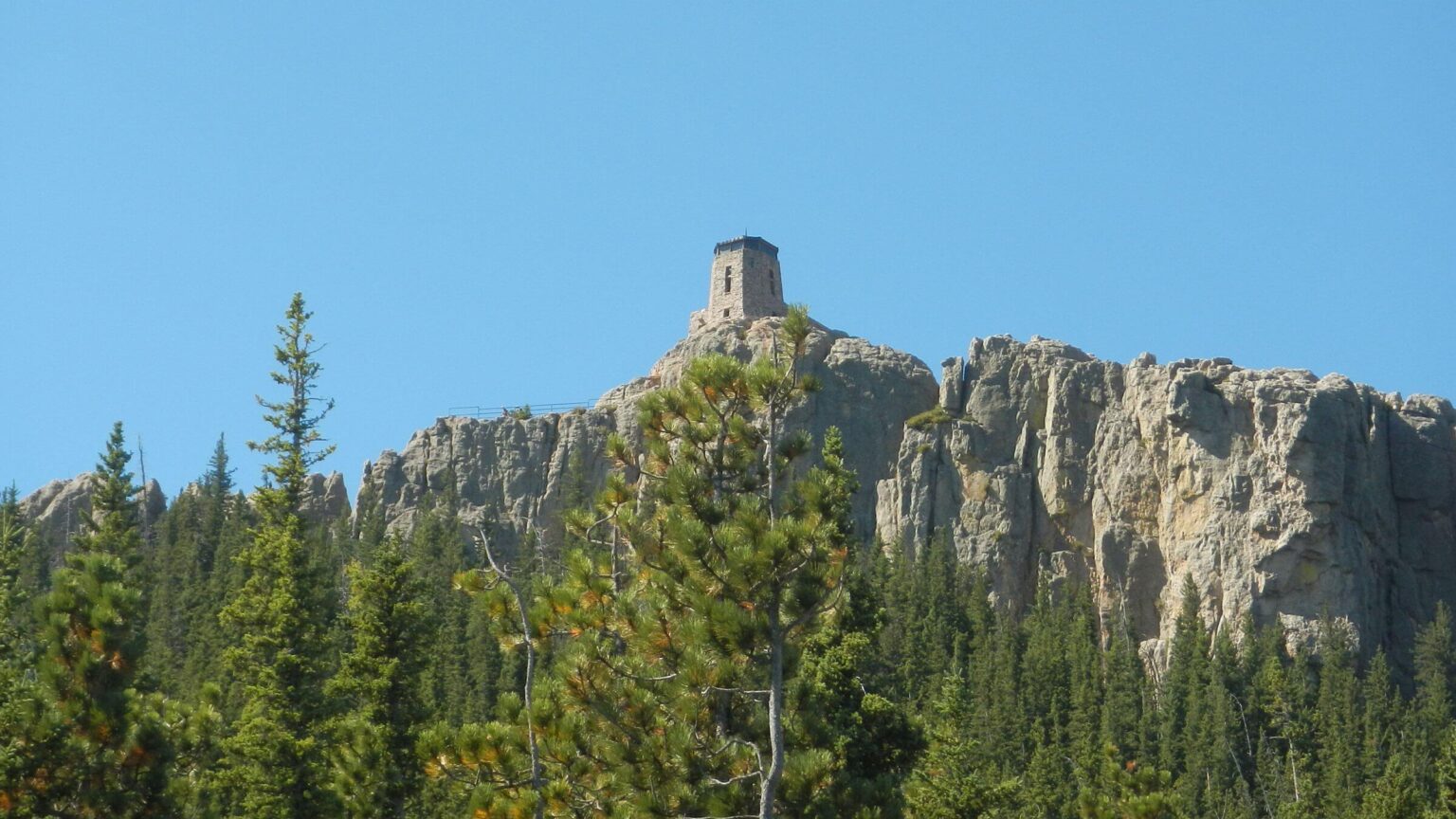 Lookout on Black Elk Peak
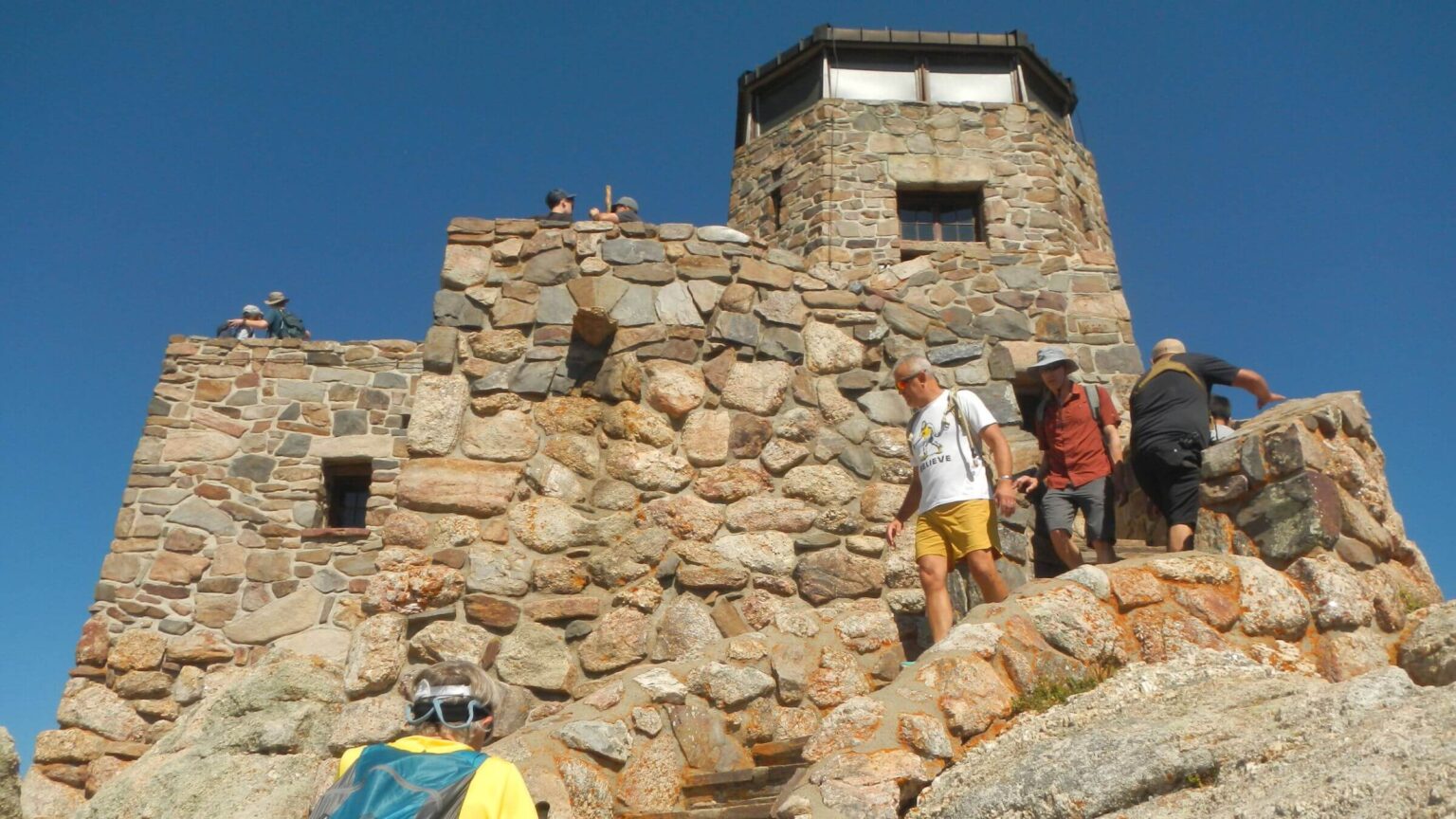 Harney Lookout, tourist attraction
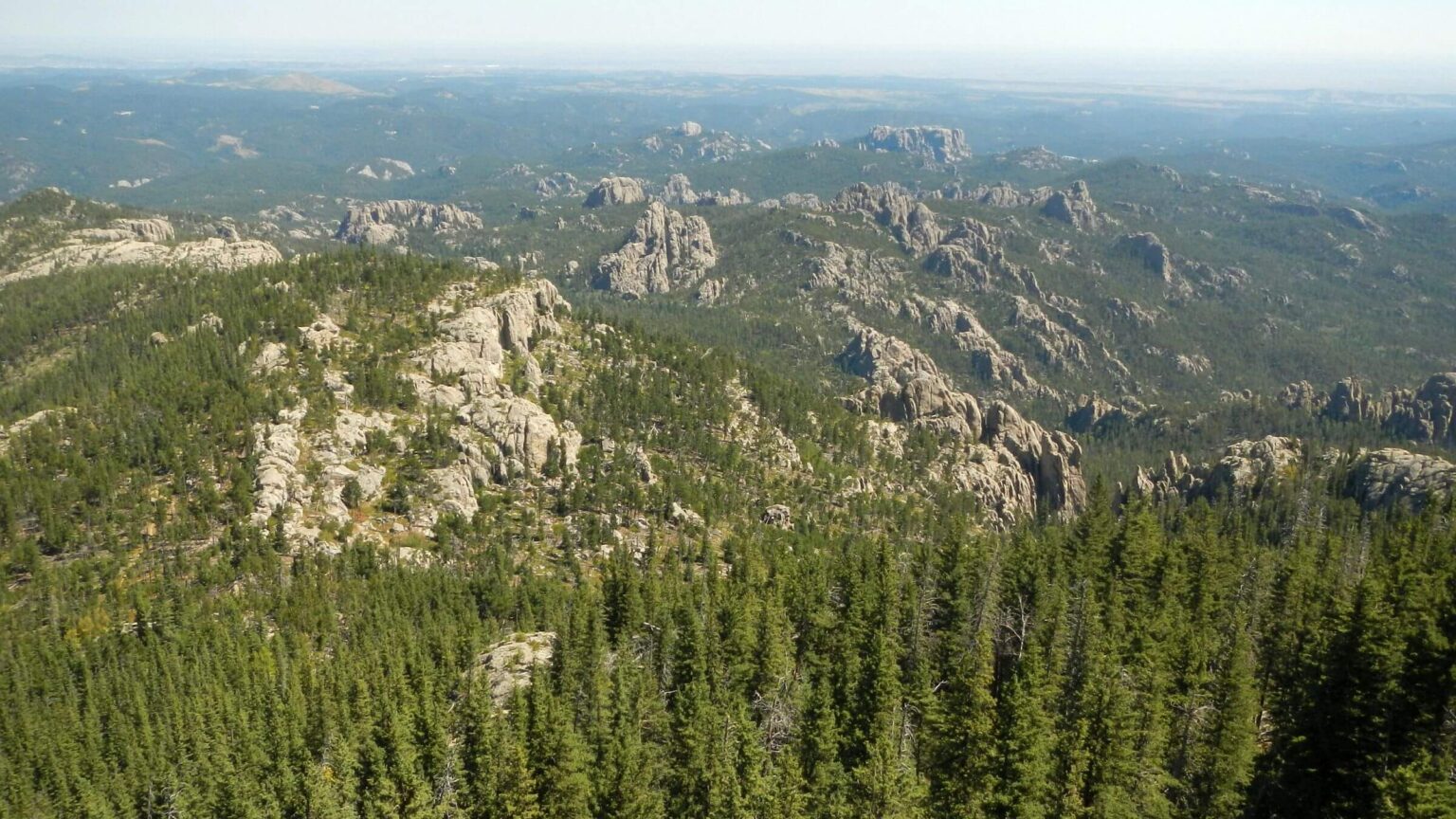 Wilderness east of Black Elk Peak
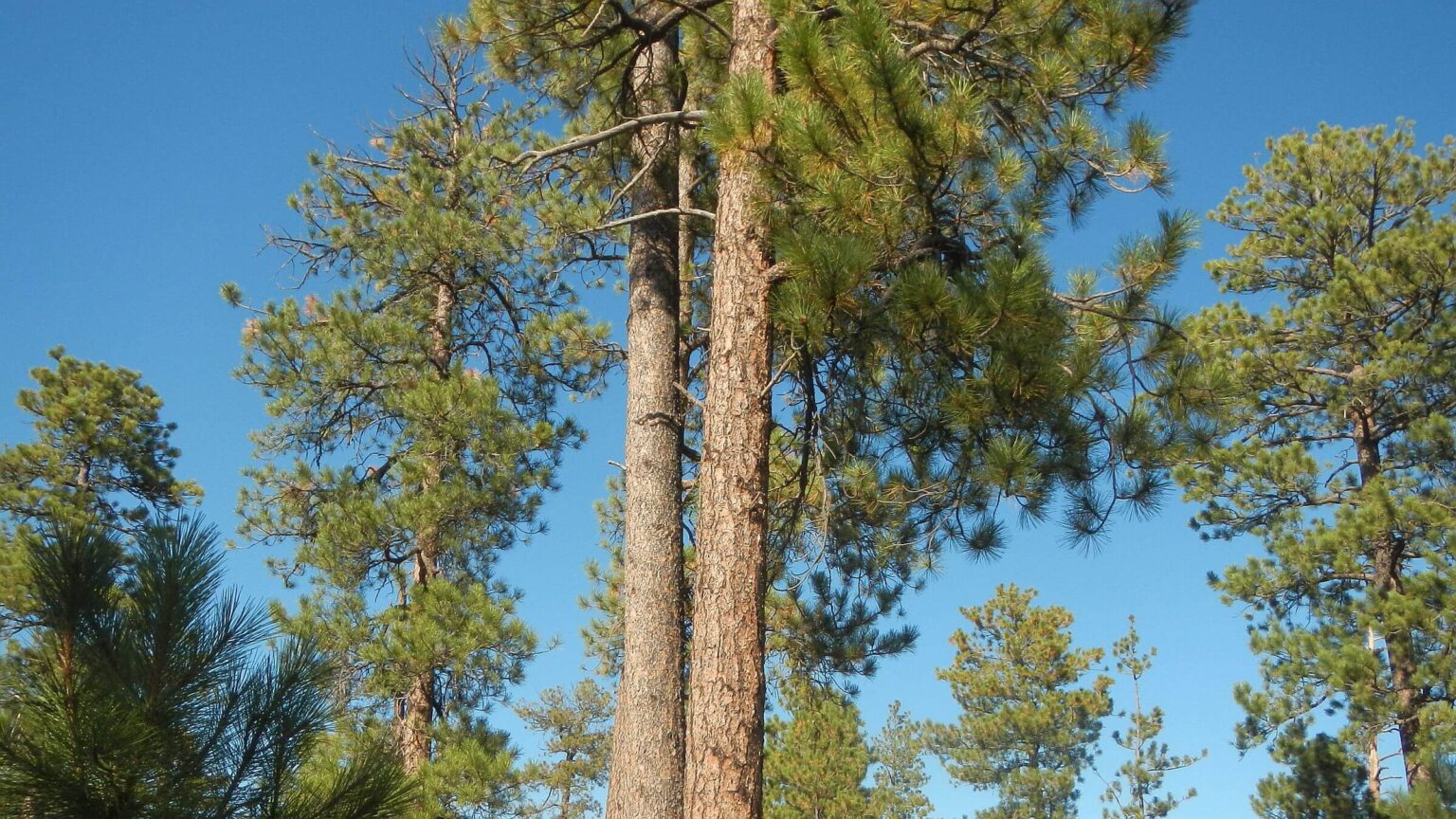 Lodgepole & ponderosa pine boles
Binomial peak visit offers irony
Our inspiration to visit BlacOur inspiration to visit Black Elk Wilderness came from its original occupants, the Lakota people who consider the area their sacred homeland.
We were attending WILD12, an international wilderness meeting in Rapid City, South Dakota. Emphasis was indigenous wilderness management. Cohosts were the Oglala Lakota whose lands included Rapid City and the Black Hills National Forest north of us. On a field trip to Wind Cave National Park, where Lakota people believed their ancestors emerged, we learned about Black Elk Peak.
Until 2016, the peak was named for a U.S. Army general who massacred Lakota Indians, our hosts explained. Learning this, we decided we needed to see this infamous peak. We ditched last morning of our wilderness meeting and headed for a hike in Black Elk Wilderness.
We found the entire day tinged with irony.
Rising early, we left Rapid City, small town with many restaurants and huge convention center that caters to thousands of tourists visiting Mount Rushmore National Monument, where faces of four U.S. presidents are carved into a granite mountain face in the Black Hills south of town. We drove through winding pine country sacred to the Lakota people, but now occupied by lodges, breweries, stores, and cabins.
Below Mount Rushmore, we took photos of the impressive granite faces. But quick early morning pass through giant empty parking areas ready for tourist buses and hundreds of cars convinced us not to stop. We turned off on national forest road and stopped at Willow Creek trailhead to start our hike.
After finishing our Black Elk hike, we paid $40 donation to visit Crazy Horse Memorial, partly done large mountain carving of Lakota warrior Crazy Horse. An Oglala chief who wanted this was refused by Rushmore sculptor but convinced one of his assistants to work on the project which is funded by private foundation of Native American sympathizers and visitors.
Between the two monuments we hiked a loop through Black Elk Wilderness, mostly alone until we reached Black Elk Peak, where we found many people and more irony. Although peak has been renamed, trail sign (click outside photo to return) and fire tower placard still acknowledge Harney. Giant stone building on peak is visible for miles and visited by thousands each year.
Black Elk Wilderness in South Dakota, designated in 1980 and encompassing 13,534 acres, is only wilderness in the Black Hills National Forest and one of two in the state (other is Badlands Wilderness in Badlands National Park). “Black Hills” comes from the Lakota words Paha Sapa, “hills that are black,” because this is how these tall pine-covered mountains appear from a distance.
Black Elk was a traditional healer and holy man of the Oglala Lakota. This branch of the Sioux Nation occupied the Great Plains region between the Missouri River and the Rocky Mountains, and believed the Black Hills sacred. Black Elk’s visions were captured in 1932 book Black Elk Speaks.
Black Elk Peak—at 7,242 feet the highest peak in South Dakota and highest summit east of the Colorado Rockies—is controversial. In 1855, the South Dakota governor named it Harney Peak to honor William S. Harney, an American calvary officer who was infamous for brutality and massacred Lakota women and children in retaliation for raids. Lakota people call Harney “Killer” and “Mad Bear.” After the Lakota petitioned for many years, the U.S. Board of Geographic Names changed peak name to Black Elk in 2016, opposed by then Governor Dennis Daugaard, Senator John Thune, and several state department officials.
Harney Fire Tower, stone building on top of peak visible for miles and completed in 1939 by U.S. Civilian Conservation Corps (CCC), still bears Harney name on stone plaque and on peak trail sign. Forest Service staffed tower until 1965. Thousands visit every year, most via 3-mile trail from Sylvan Lake in Custer State Park.
Our 15-mile loop day hike included both parts of Willow Creek loop trail north of wilderness, Black Elk Peak Trail, and Lost Cabin Trail. We saw a trail runner, three day-hikers doing peak from Willow, two on Lost Cabin Trail, and then dozens doing short out-&-back to peak.
Visit statistics: 15.0 mi distance at 2.1 mph with average elevation change of 425 ft per mi (ascending 3100 ft and descending 3100 ft).
Go to map below for more information on trailheads, daily routes, mileages, elevation changes, and photos. (Click on white box in upper-right corner to expand map and show legend with NAVIGATION INSTRUCTIONS.)
show more
Rock pillars, solitude & crowds on peak
We started and ended our pilgrimage at Willow Creek Trailhead on north end of wilderness right off Highway 87, by a beautiful campground in tall trees (currently closed). We went along part of Willow Creek loop trail through green meadows, young pine, aspen, and brush. After junction, Black Elk Peak Trail was rocky climb winding through basins of scabby forest with stunning rock monuments on ridgeline. We switch-backed up to barren ridge robbed of most trees either by fire or blowdown.Far ahead I saw peak with giant rock top; as we got closer, I saw fire lookout made of stone. We met three separate day-hikers, all returning from peak. “A lot of people,” one warned. He wasn’t kidding. At spur trail to peak we met young hikers, moms and dads toting babies, kids, teens, and older folks. We joined hikers on curving stairway leading to tower flanked by rock banisters. Snags near tower entrance bore multi-colored prayer flags; a large pole supported effigy of an American Indian—perhaps Black Elk?
I followed line up winding steps within tower. After view of sprawling Black Elk country from open patio, I headed down; we took lazy switchbacks down Black Elk Trail, continually meeting hikers. I wanted to visit Custer State Park for short side trip to Little Devils Tower but David nixed extra 4 miles since we wanted to reach town of Custer in time for dinner.
The town, county, and state park are named for George Armstrong Custer, Army officer famous in Civil War who battled American Indians and discovered gold in Black Hills. This launched Black Hills Gold Rush drawing white Europeans to take over the area. Crazy Horse and other Lakota Sioux killed Custer at Battle of the Little Bighorn. We lost crowd after turnoff on Lost Cabin Trail, moving through trees and grottoes, a drop down small canyon, before following boggy creek and climbing to ridge adorned with stone pillars. Near the top we met a mom and daughter taking break in a side canyon—last hikers of the day.
Trail contoured on ridge, then left wilderness on long switchbacks into Palmer Creek drainage. Grass brush and dead trees indicated fire but we found no records in federal government fire database; perhaps fires were too small to be recorded.
Finally the trail rounded the head of creek, climbed a small ridge, and then dropped to follow and cross a small creek and returned to the trailhead.
Post Hike Reflections
Custer was a rather classy little tourist town where we found great burgers and service and joined a long line at Purple Pie Place seeking ice cream or a slice of pie.David felt sick and tested positive for COVID-19 next morning—either from a WILD12 meeting attendee or maybe during travel to meeting after our Colorado venture. I was tempted to blame hordes on Black Elk Peak, but too soon—it takes two days to show symptoms after exposure.
We would like to return to Black Elk Wilderness, perhaps for backpacking trip exploring east side on section of state’s Centennial Trail, Grizzly Creek, and Norbeck Trails with loop through Custer State Park. We expect solitude except near well-trammeled Black Elk Peak.
show less
Google Map
(Click upper-right box above map to “view larger map” and see legend including NAVIGATION INSTRUCTIONS; expand/contract legend by clicking right arrow down/up.)